
Matthew Mikalonis
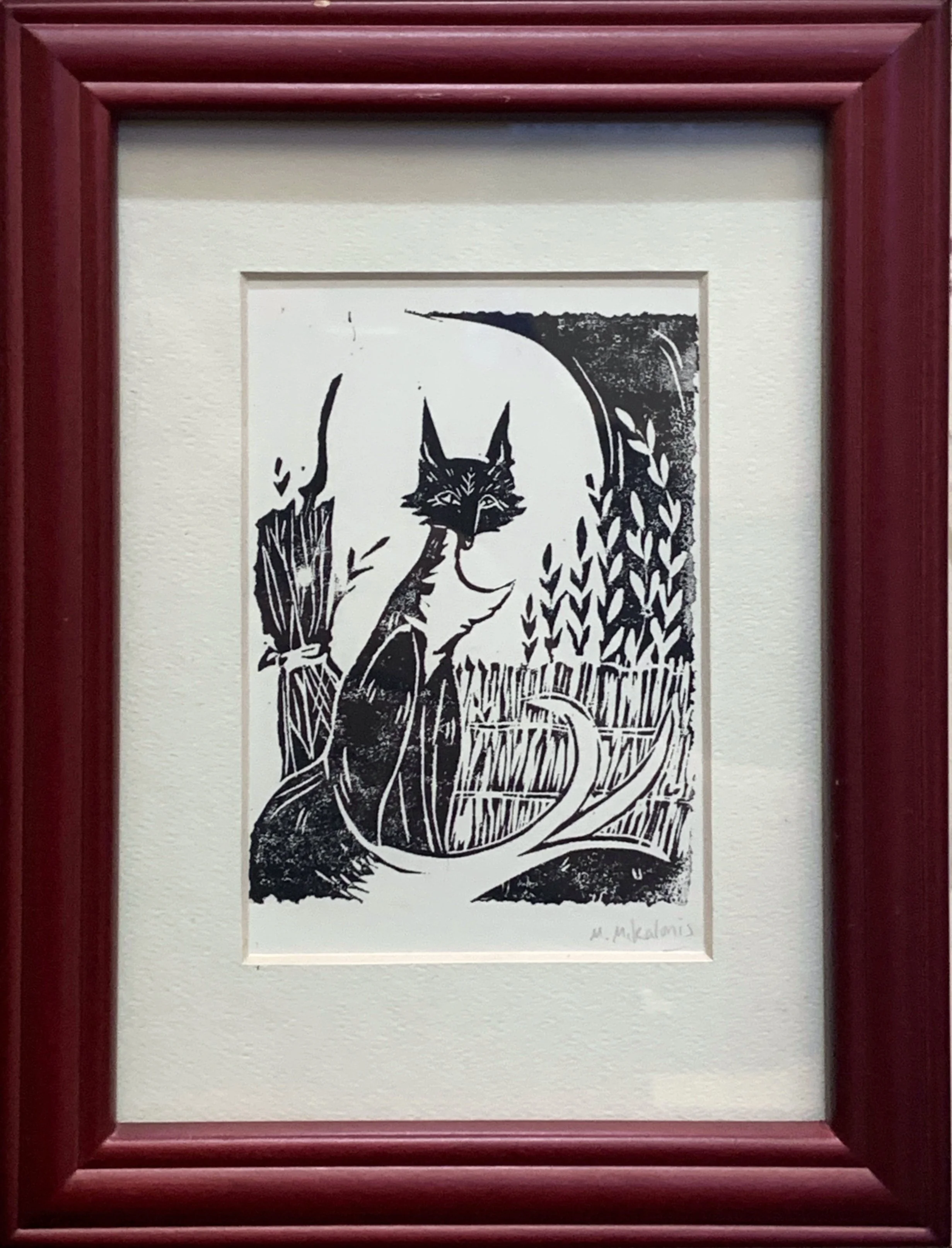
Before written text, stories were told through song, spoken word, or images arranged in sequence. Each telling could shift from one storyteller to the next. One person shares a story, every listener leaves with their own interpretation, and those interpretations continue to develop as they are retold. I hope to embody that same sense of community and collaboration in my own work by encouraging viewers to form their own stories and connections around the images I create. My imagery is drawn from my imagination and informed by many folk techniques and sensibilities—patterns found in ribbons, traditional paper-cut art, and historic textiles— and often leans into mythology and folklore. I am fascinated by storytelling as a collaborative act, one that invites multiple perspectives and lets meaning grow through shared experience. The physical processes I use to create my works are an extension of these ideas, allowing stories to be built up, layered upon, and transformed.
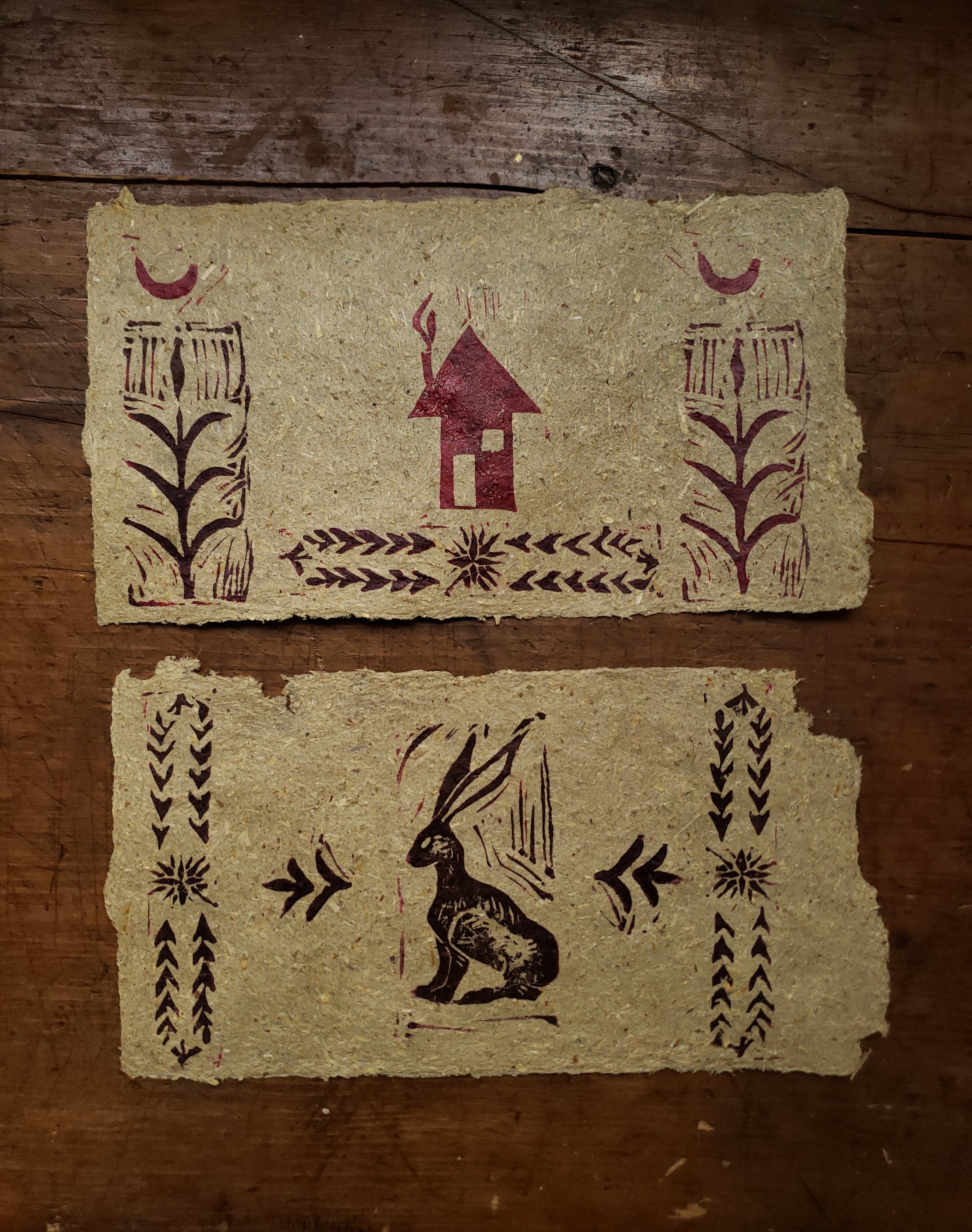
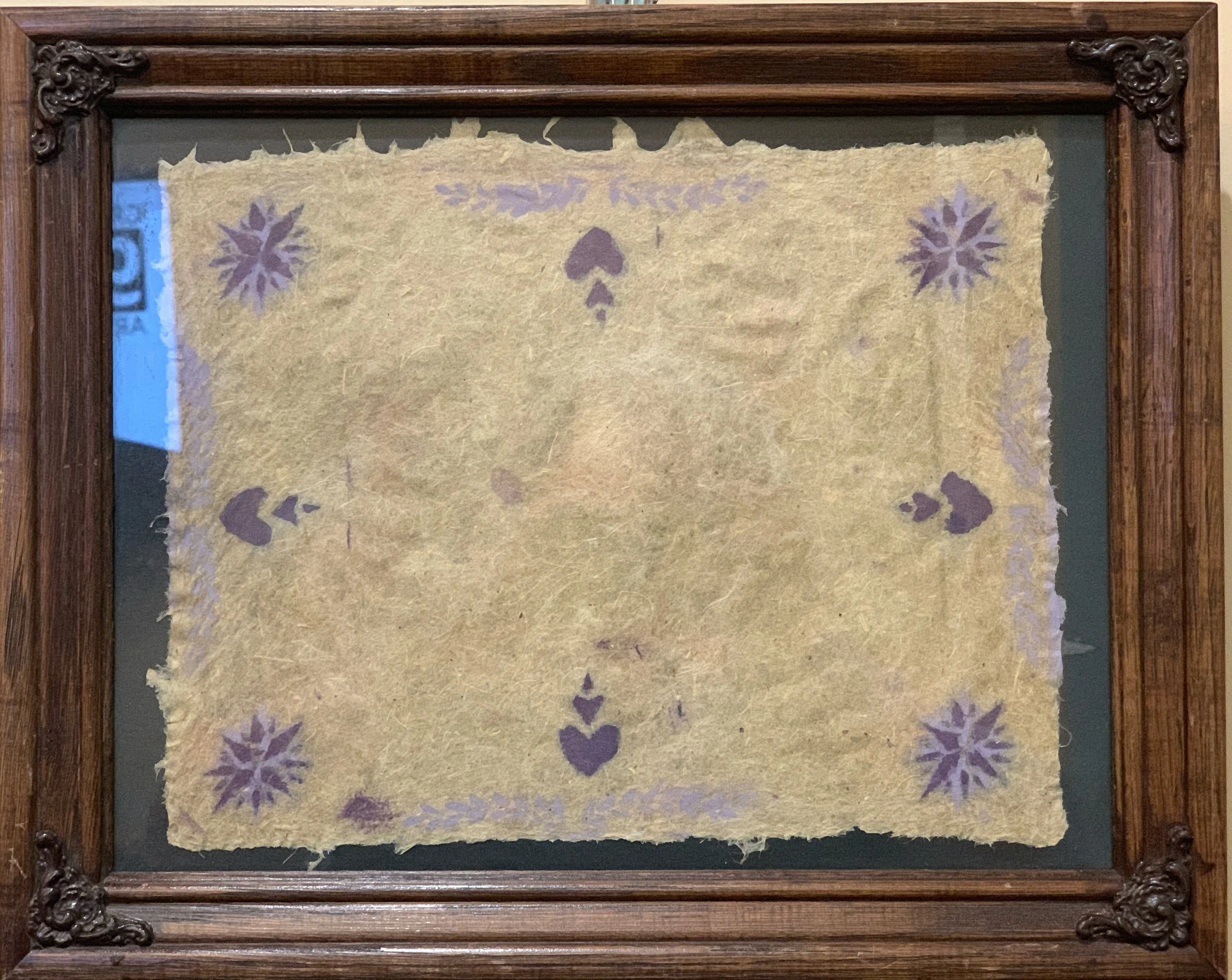
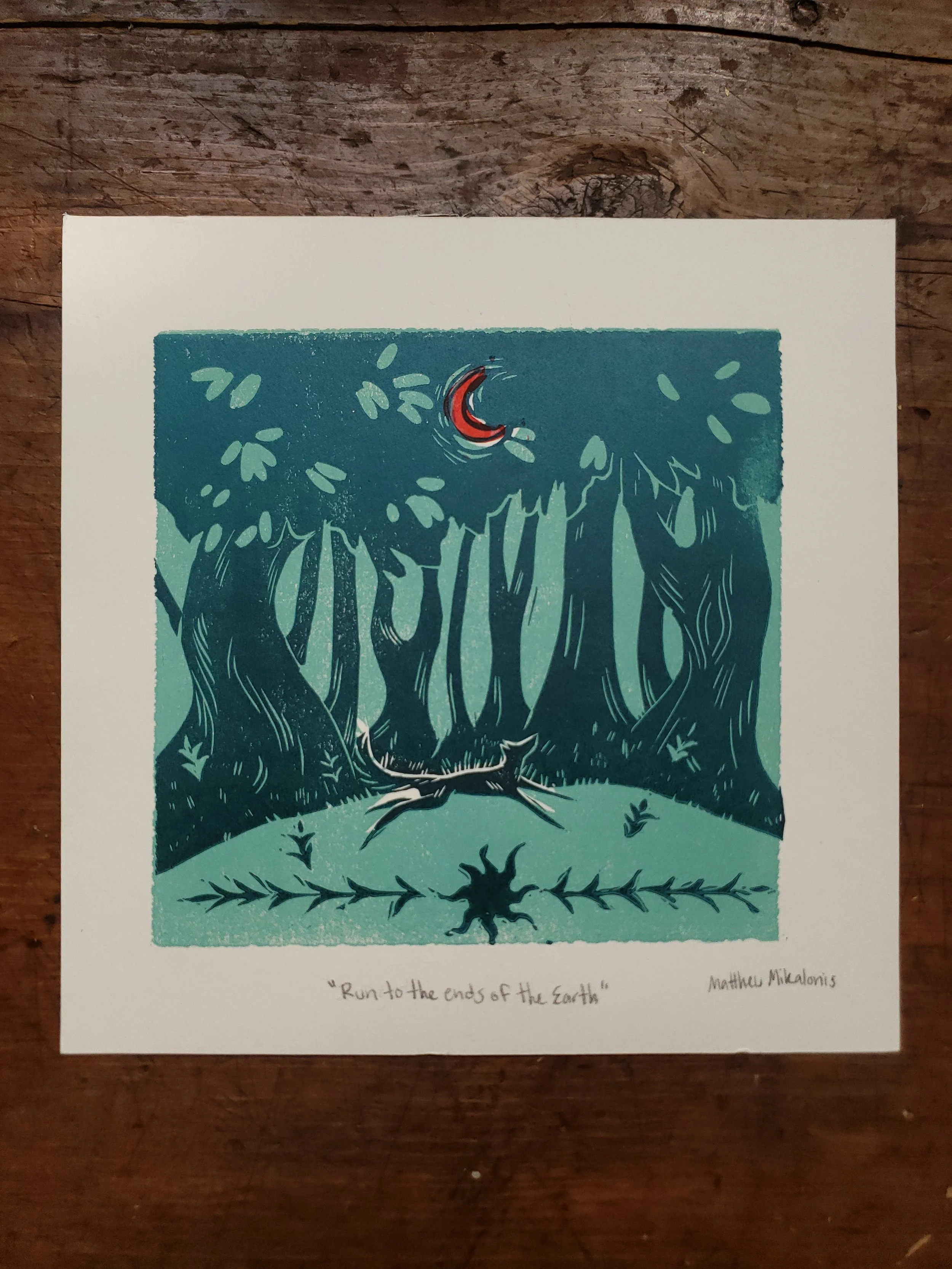
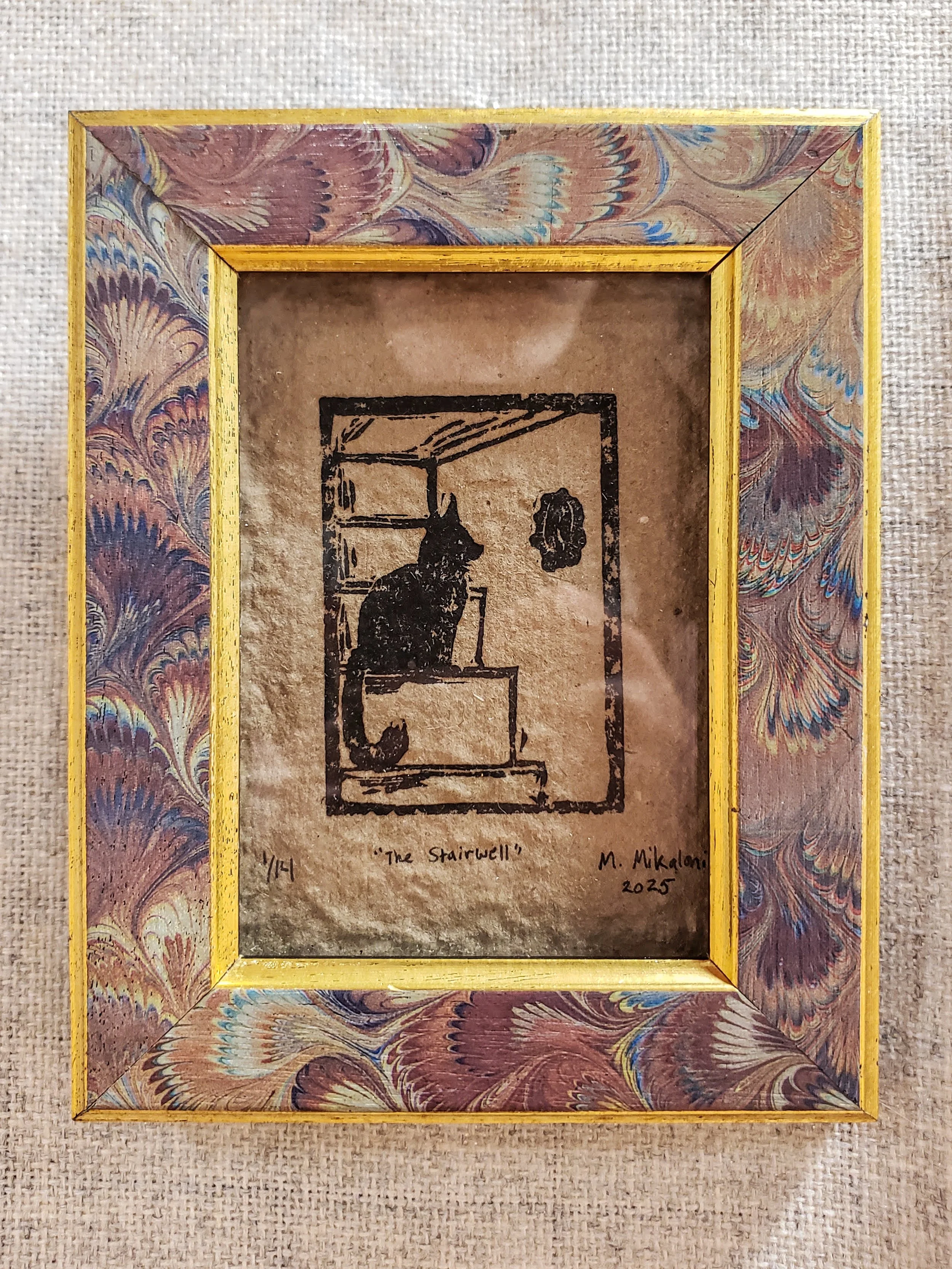
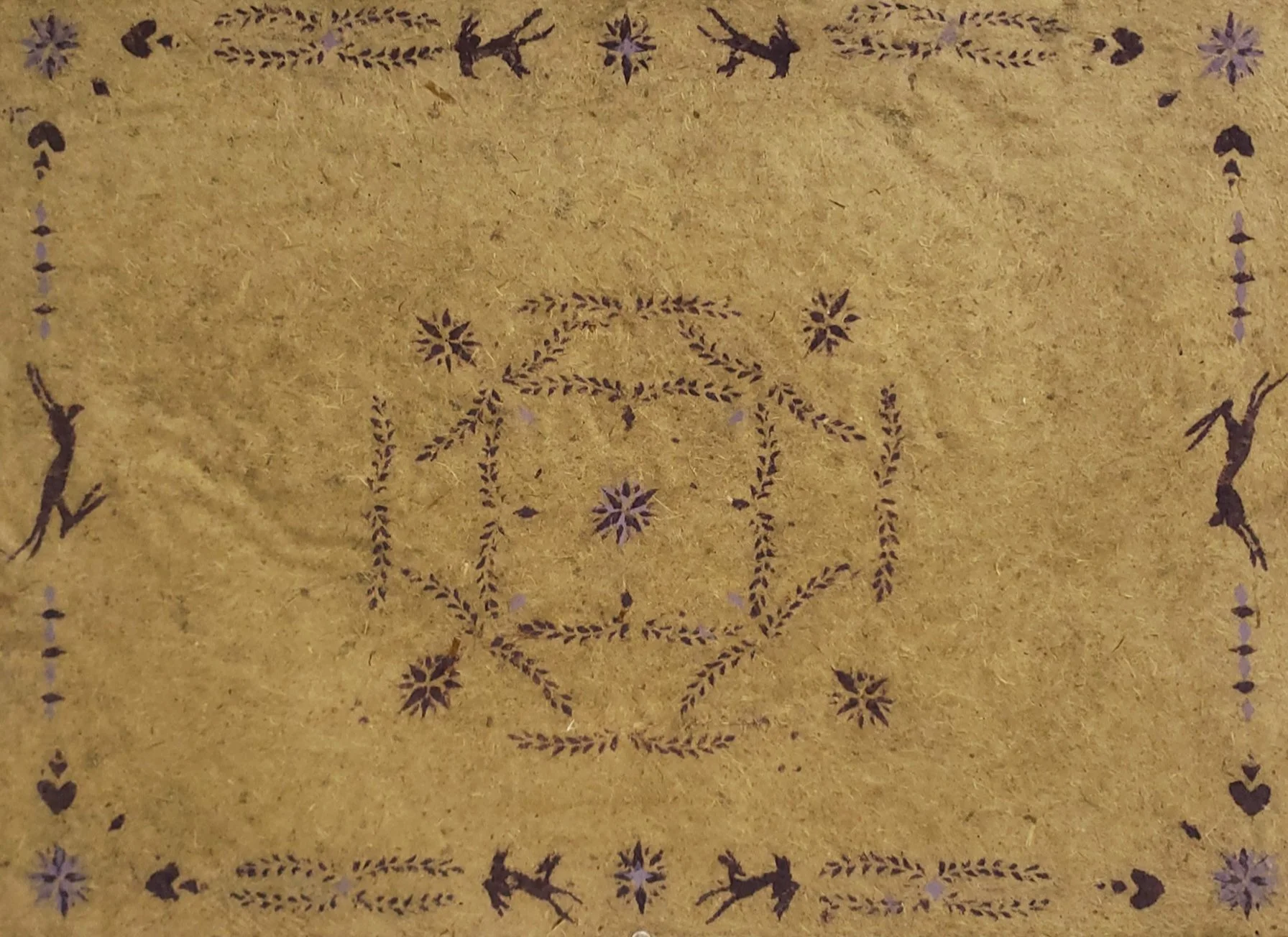
The primary mediums I work in are linocut and woodblock relief printing, bookbinding, and handmade paper. I fell in love with these processes while earning my BFA at the School of the Art Institute of Chicago which I've continued developing after returning to Connecticut in 2024. I create images directly within handmade paper using pigmented paper pulp. After cutting my own Mylar stencils, I pigment finely beaten cotton pulp and apply it to freshly pulled sheets of paper with a spray bottle. As the sheet dries, the coloured pulp bonds with the fibers, embedding the image into the paper itself so the story is woven into its structure. I also carve linoblocks to print on other handmade papers, I'm drawn to the act of carving, as well as the ability to make more iterative work with an ease that I might not have working with other mediums. This also lets me create editions that allow my work to reach a wider audience.
Recently, I have become interested in the idea of a loss of information, inviting viewers to fill in gaps of the story. I intentionally create handmade sheets where the paper is too thin and torn in spots, producing images that fall off the page, or are entering onto the scene from somewhere else. This interest is connected to my fascination with archaeology and antiques, where objects tell stories through the wear and tear left on them from time and use. My commitment to a low- waste practice also shapes this exploration. My leftover paper trimmings are woven into new sheets that become new improvised sheets of paper for additional prints, transforming scraps into an opportunity to experiment. These woven papers can then be disassembled and reassembled like puzzles, allowing me to alter the image after it has been made. Nothing goes unused; instead, each limitation becomes an interesting challenge for myself to discover new ideas.